Reverse Poem by Julie Wasmund Hoffman

My fear
Is bigger than
God’s love for me
“I want to run away.”
I will never again say
“I am free.”
Or
“I can stay here and be okay.”
I believe
Vulnerability is terrifying.
I no longer think
I am lovable.
I will never be good enough.
It is not true that
I am strong.
I am damaged goods.
Nobody believes
There is joy available for me.
Sorrow is my only option.
I used to think
I am strong enough to let down my guard.
I now know that
“I am broken.”
I will no longer say
“I can be whole.”

Now read each line from the bottom to the top.

Day 11 – Poetry Month (Limerick)

Med Head: My Knock-down, Drag-out, Drugged-up Battle with My Brain by James Patterson

https://i0.wp.com/www.jamespatterson.com/im/books/lg-medHead.jpg


There once was a young man named Cory,

Who had a triumphant story –

Tourette’s, OCD,

Mixed with anxiety-

Tough love (not the meds) brought him glory.

Poetry Month – Day 5

When I made the decision to post a poem each day of this month, it was with the intention of writing a different type of poem each day.  I keep coming across the Blitz poem (invented by Robert Keim), and I felt the need to try it.  It was challenging, but fun.  Here’s what I came up with…

Man-All

Man o’ war

Man of steel

Steel boned corsets

Steel cut oats

Oats and whey

Oats and grains

Grains of sand

Grains of truth

Truth or dare

Truth be told

Told you twice

Told you so

So it goes

So you say

Say a prayer

Say my name

Name of names

Name that tune

Tune the piano

Tune in

In the closet

In the dark

Dark of night

Dark of day

Day of reckoning

Day-dream

Dream a dream

Dream and wish

Wish on a star

Wish me luck

Luck of the Irish

Luck be a lady

Lady and gent

Lady in waiting

Waiting on train

Waiting on a friend

Friend indeed

Friend in need

Need a break

Need a drink

Drink it up

Drink to that

That is all

That is enough

Enough to eat

Enough said

Said it all

Said it best

Best…

All…

Shout Out to Teachers

I was recently at a beginning-of-the-school-year-pep-assembly-for-teachers. I believe that the premise was to speak to teachers about how they make a difference, and encourage them to embrace the many, many challenges that will be faced this school year. What I noticed, however, was a small group of teachers being recognized. A handful of students were mentioned: those who earned a perfect ACT score, those about to attend a particular university, and some who were the National Merit Scholars. Teachers of those particular students were asked to stand up and “Claim those scores.” It was nice, but something very important was missing. Ninety percent, or more, of the teachers in the district were still sitting. Was there really a difference in the quality of teacher between those standing and those sitting? I doubt it! Questions started firing off in my head “What about the students who earned a 35 on the ACT? What about the other universities? What about the teacher who dedicates her day to students who struggle?

As I thought, I started reflecting on some of the teaching that I see every day in the building where I teach. My school has a “Life Skills” class. Not one student in that classroom will be earning a perfect score on the ACT, nor will any of them attend an Ivy League school for college. In spite of this, the life skills teacher knows the value of each student in her room. She teaches them to read and write, she teaches them grooming skills, she teaches them how to ask for what they need. She teaches them how to shop at the grocery store. When her students are ready to move on to high school, she has a party, decorates her classroom with that particular school’s colors, and gifts the child with spirit wear so that he/she knows about the high school before they ever step in the door. She too deserves applause.

We have a speech teacher who recently visited Alaska. When she returned, she taught her students about the Iditarod. These students (who will not be earning a perfect score on the ACT) were using maps of Alaska to trace the routes. Students were reading fiction and informational text about the the great sled race, the dogs, and the mushers. They learned about the mushers, and kept track of them through the news and on-line. All the while, students were making improvements with their own speech through these valuable lessons. This teacher deserves applause.

We have a science teacher who works with students who are struggling readers. These students will not be attending an Ivy League school. However, their science teacher places exciting books about science topics on their desks, and these students look through the books when they come into the room everyday. Without realizing they are doing so, these students are being exposed to high-quality expository text that they would never choose for themselves. Applause for this instructor?

We have a math teacher who works with kids in an inclusion class (probably not going to ace the ACT). In spite of this, she stays late to tutor students who are struggling. She teaches, she explains, she shows, she draws, she lets students use math manipulatives. She tries to prepare each student individually by using a variety of methods. She lets students practice, provides reteaching, and lets them try again, always conscious that learning is a process. Her students may not earn a 36 on the ACT, but they will be prepared to do well. That’s high-quality teaching for all students. Give her applause.

I watched a teacher interact with an angry student. This student had been labeled with a behavior disorder, already had a track-record-of-trouble, and was about to make a series of choices that would have added much more to his record. The teacher stepped up, stayed calm, and started asking questions of the young man. After several minutes, it was obvious that they had a relationship with trust and respect. The student was given responsibility for his next actions, and was given choices. It was obvious that he had grown quite a bit, and that the teacher had spent many months helping the student to learn how to be upset without creating more issues for himself. That deserves applause.

So, if you are a teacher, you are worth so much more than the name of the university that your students may eventually attend. You might have students that planned to drop out of school by 16. Maybe something you said or did helped that student to stay committed to earning a high school diploma. That is praise-worthy! You might have students who don’t know what they are interested in, but you help them figure that out. That deserves applause. You might have a student who was content with handing in passable work until they had you as a teacher. You may have taught that student that it is worth taking on a challenge, even when it is difficult. You may have convinced a student that even if they can’t be the star of the basketball team, that they can run and be fit that way. You may have taught a student that life isn’t about being perfect, or getting a perfect score, but that it is about serving others, finding your interests, working hard, and being the best individual you can be. That, teachers, is praiseworthy. Claim that!!!

Pressing Pause

Sorry I haven’t posted in months.  I will be serving a 3-year term on the Rebecca Caudill Evaluator’s Committee, so I won’t be able to comment on what I am reading.  I am reading some great books, but you will have to wait until January for the 2014 Master List.  Until then, here is a link to the 2013 list:

http://www.rcyrba.org/pdf/2013MasterList.pdf
2013 Master List
Rebecca Caudill Young Readers

Happy reading!!

More Historical Fiction

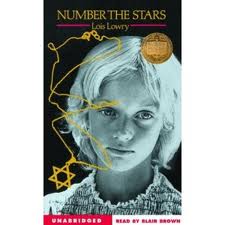
Number the Stars by Lois Lowry

Ages 10 and up

Annemarie is in Copenhagen, Denmark in 1943, when Nazis have taken over.  At first, Annemarie doesn’t think much about it, as she hasn’t been directly affected.  Eventually, her best friend Ellen, and her family, are in danger so Annemarie takes greater steps to be brave, courageous and to see as much of the truth as she can handle.

My Rating: 4.5 Stars


Out of the Dust by Karen Hesse

Ages 11 and up

The book is written in freestyle verse, from the viewpoint of Billie Jo, the female protagonist. Billie Jo, her father, and her mother (who is with child) live in Cimarron County (in the panhandle of Oklahoma) during the dust storms of the 1930s.  Billie Jo describes life, and the way that her family tries to keep going in spite of the dust and dirt on everything they own.  Early on in the story, Billie Jo’s mother (and the baby) after a horrible accident that was caused by carelessness.  The rest of the story is about how Billie Jo and her father exist around each other while they each grieve.

My Rating:  5 Stars

Picture Books about Night

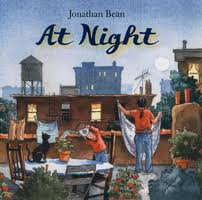
  At Night by Jonathon Bean

Ages 4 to 7

When a little girl can’t get to sleep, she finds a place that works better than er own bed.  (Follow the black cat through the pages of the story too!)

My Rating: 3.5 Stars

Smoky Night by Eve Bunting

Ages 8 to 18

On a night full of rioting and fire, in a city with racism, Daniel learns an important lesson from his cat Jasmine.

My Rating: 4 Stars

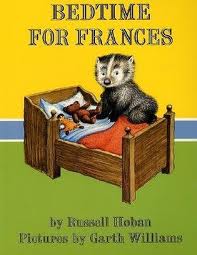
Bedtime for Frances By Russell Hoban

Ages 3 to 103

Frances does NOT want to go to bed.  After requesting milk and more goodnight kisses, Frances has to face the things in the dark.  She even made up a song to try to fall asleep, but it only got her thinking about tigers. . . Father has some good ideas about how to help Frances finally get to sleep.

My Rating:  5 Stars

Two More

Coraline by Neil Gaiman

Ages 10 to 14

Coraline, an only child, lives in a flat with her mother and father, who are usually busy.  Coraline discovers a door that connects to the other flat.  When she figures out how to get over to the other side, she discovers some similarities and some differences compared to her side.  Even the “people” resemble her family.  Making her way back, if she can, will require facing darkness, desires, and fear.

My Rating:  3.5

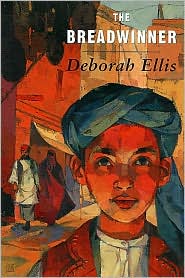
The Breadwinner by Deborah Ellis

Ages 11 to 99

Parvana lives in Afghanistan, with her well-educated family.  Unfortunately, the Taliban have control over the city where Parvana lives.  Her family has had to move out of their nice home, and now live in a small room with barely enough food, and no water.  The Taliban use violence and fear to control everything.  They have even called off school!  As the Taliban hurts Parvana’s family directly, she has to be brave and do some things that she never would have imagined.

My Rating:  5 Stars!!

A Few Good Books


Savvy by Ingrid Law

Grades 6 through 8

Life is challenging enough for anybody who is about to turn 13, but for Mibs Beaumont, turning 13 changes everything.  Every Beaumont has a “savvy” or a special talent that starts on the 13th birthday.  One Beaumont can control electricity, and one can create huge storms and hurricanes.

Mibs convinces herself that her savvy can wake up her dad, who is hospitalized in a coma.  When she gets on a bus to sneak to the hospital, she and her siblings end up on quite the adventure.

My Rating:  4 Stars

Joey Pigza Loses Control by Jack Gantos

Grades 4 through 8

Joey gets to spend the summer with his dad who convinces (forces) Joey to stop taking his ADHD medications.  As Joey loses control of himself, he also has to come to terms with some other difficult issues:  his parents’ divorce, his dad’s alcoholism, and his grandmother’s addiction.

My Rating:  5 Stars

The Tale of Desperaux : Being the Story of a Mouse, a Princess, Some Soup and   a Spool of Thread by Kate DiCamillo

Ages 5 to 105

This story is a story of a mouse, Desperaux, who is not content with his lot in life.  He is a dreamer, and falls in love with a princess, named Pea.  As Desperaux fights for a life that is more than what he was offered he has to confront rejection, fear, darkness, and the rats in the dungeon.

My Rating:  4.5 Stars (4 the first time I read it; 5 the second time)

A Few More

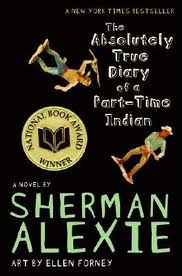
The Absolutely True Diary of a Part-Time Indian             by Sherman Alexie

Grades 7-12

Junior (Arnold) has an opportunity to leave his reservation to attend a better school.  While he does so, he faces the challenges of being a minority, anger from old friends who feel abandoned, and family issues.  With a mix of humor, and excellent artwork (by Ellen Fornay), Junior deals with issues common to any teen coming-of-age, and issues significant to Native Americans on a reservation.

My Rating:  5 Stars

Bud, Not Buddy by Christopher Paul Curtis

Grades 5 to 8

In this historical fiction piece, set in the 1930s, Bud moves through some foster homes, not asking for trouble, yet finding it.  Finally, he decides to “go on the lam” (run away) to find his dad.  Believing that his dad is Herman E. Calloway, Bud travels from Flint, MI to Grand Rapids to find Calloway and his band.  All Bud has are some “Rules and Things to Have  a Funner Life”,  a suitcase with some belongings, and his name, Bud, not Buddy.

My Rating:  4 Stars

Skinny by Ibi Kaslik

Grade 9-12+

Holly (14) and Giselle (22) take turns telling the story chapter by chapter.  Giselle is struggling with a co-dependent relationship with her boyfriend Sol, anorexia, and being a grown-up.  Holly is trying to be a teenager, while holding up her emotionally broken sister, and emotionally absent mother.  Both girls grieve the loss of their father, and cling to each other to get through life.

My Rating: 4 Stars

Staying Fat for Sarah Byrnes by Chris Crutcher

Grades 8 through 12+

Eric and Sarah have a friendship that goes back for years, and was originally based on being two misfits.  Eric was obese and Sarah’s face is scarred from a burn that happened when she was 3.  When Eric joins the swim team, he loses weight, and his social life changes.  At first, because he cares about Sarah, Eric tried to keep the weight on, to prove that he wouldn’t bail  on her.  Sarah’s circumstances become so severe that Eric goes out of his way to show Sarah that he cares for her regardless of his weight.  Eric would do anything to keep Sarah safe, even if it means risking his own life.

My Rating:  5 Stars